
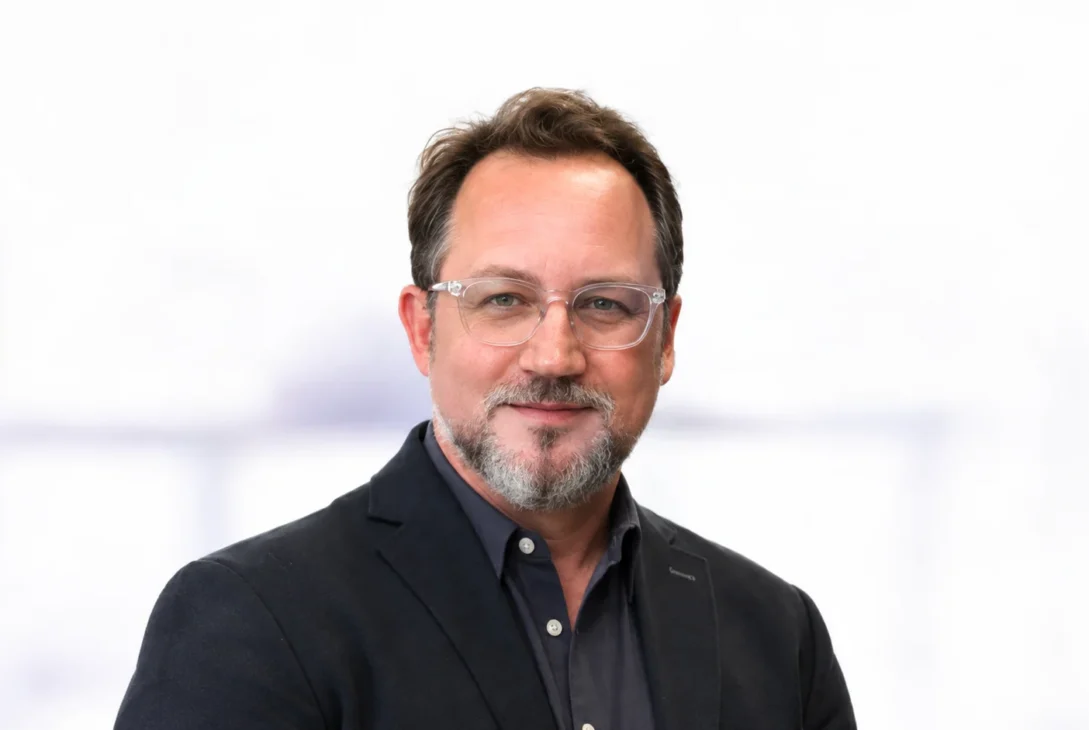
Andreas Forsland founded Cognixion in 2014, but the idea took root two years earlier, in a hospital room. When his mother was intubated and placed on life support after pneumonia escalated into septic shock, Forsland became her primary advocate and communication link, translating her intent to caregivers for weeks. The experience revealed a problem he couldn’t unsee: hundreds of millions of people worldwide live without reliable speech or physical mobility, often with no adequate way to communicate their needs.
That realization shaped Cognixion’s mission. Before founding the company, Forsland built a career in design and brand strategy, holding senior roles including Senior Director of Global Creative for Citrix’s SaaS division and Senior Manager of Design at Philips — a background spanning hardware, software, and product design that he later applied to assistive technology. Cognixion, originally launched as Smartstones, evolved into what Forsland describes as an “assisted reality” company, building neuroprosthetic wearables that let people with complex disabilities control mobile and augmented-reality interfaces using their face, eyes, and brain signals.
Its flagship product, Cognixion ONE, combines a brain-computer interface with an augmented-reality display, aimed at reducing the gap between a user’s intent and their ability to act on it. The company has earned FDA Breakthrough Device designation, been named among the top neurotech startups to watch, and won the Red Dot Best of the Best Award for AR/VR design.
Now based in Santa Barbara with an additional office in Toronto, Forsland continues to frame Cognixion’s work around a simple principle: reframing technology’s core function from input and output to intention and outcome, so that people who cannot speak or move freely can still be heard. His path — from an unplanned caregiving crisis to founding what he calls the “Tesla of Neurotech” — reflects a rare case of personal urgency translating directly into a company’s technical mission.