
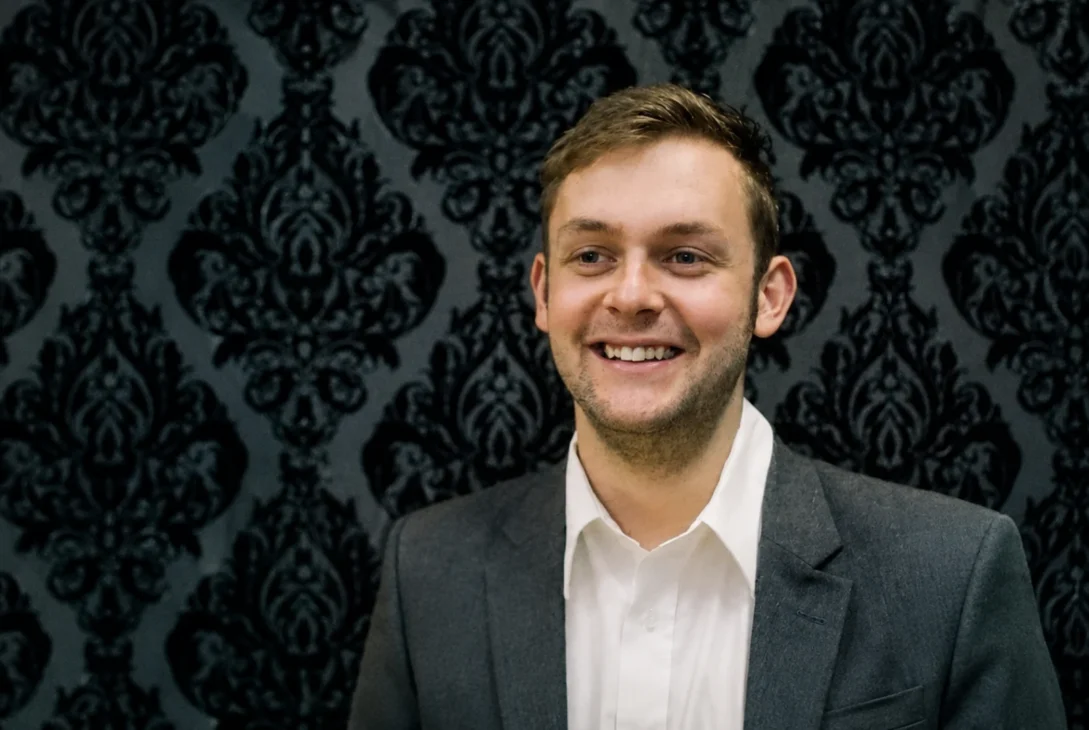
Levi Fawcett founded Partly in Christchurch, New Zealand in 2020, an unusually specific bet: that a foundation model trained exclusively on vehicle parts could solve a problem the general internet had failed to fix, matching the exact part to the exact vehicle. Fawcett grew up on a rural Canterbury lifestyle block, mostly homeschooled, and spent his childhood tinkering with go-karts, computers, and farm equipment before earning a Mechatronics Engineering degree from the University of Canterbury in 2017, during which he had already launched four separate businesses, including a website-building platform and a prefabricated caravan venture. After graduating, he worked as an engineer at Rocket Lab on hardware simulation before founding Partly with co-founders Nathan Taylor, Mark Song, Evan Jia, and Tony Austin, the latter a former eBay Europe executive who had helped launch Amazon in Australia.
Fawcett’s founding insight came from personal frustration: roughly 95 percent of auto parts purchases happened offline at the time, compared with a 79 percent offline average across retail broadly, and most orders relied on a human “parts interpreter” manually translating a vehicle description into a part number over the phone. Partly’s answer, fittingly named Interpreter, is a multimodal foundation model trained specifically on vehicle parts data, built to identify exactly which part fits a given vehicle across the fragmented and inconsistent catalog structures used by different manufacturers. The company says it spent more than four years and $10 million developing the model.
Partly has scaled rapidly on the back of that technology. Its December 2022 Series A, a NZ$37 million round valuing the company at NZ$180 million, was the largest Series A in New Zealand’s history at the time. By June 2026, the company closed a $50 million Series B led by DST Global Partners at a $500 million valuation, with Interpreter by then supporting more than 1,000 businesses and infrastructure processing hundreds of thousands of repair jobs monthly. Partly has raised approximately $92 million in total from investors including Blackbird, Octopus Ventures, Square Peg, and individual backers such as Rocket Lab’s Peter Beck, Square’s Randy Reddig, and Figma’s Dylan Field, and has recently opened its first U.S. operation targeting the collision repair sector.
Fawcett’s stated long-term ambition extends past commercial success: he has said he hopes that by 2044, unnecessary vehicle scrapping driven by parts inaccessibility will be a thing of the past, framing Partly’s AI infrastructure as much an environmental project, reducing shipping emissions and landfill waste, as a commercial one aimed at modernizing a historically analog global supply chain.