
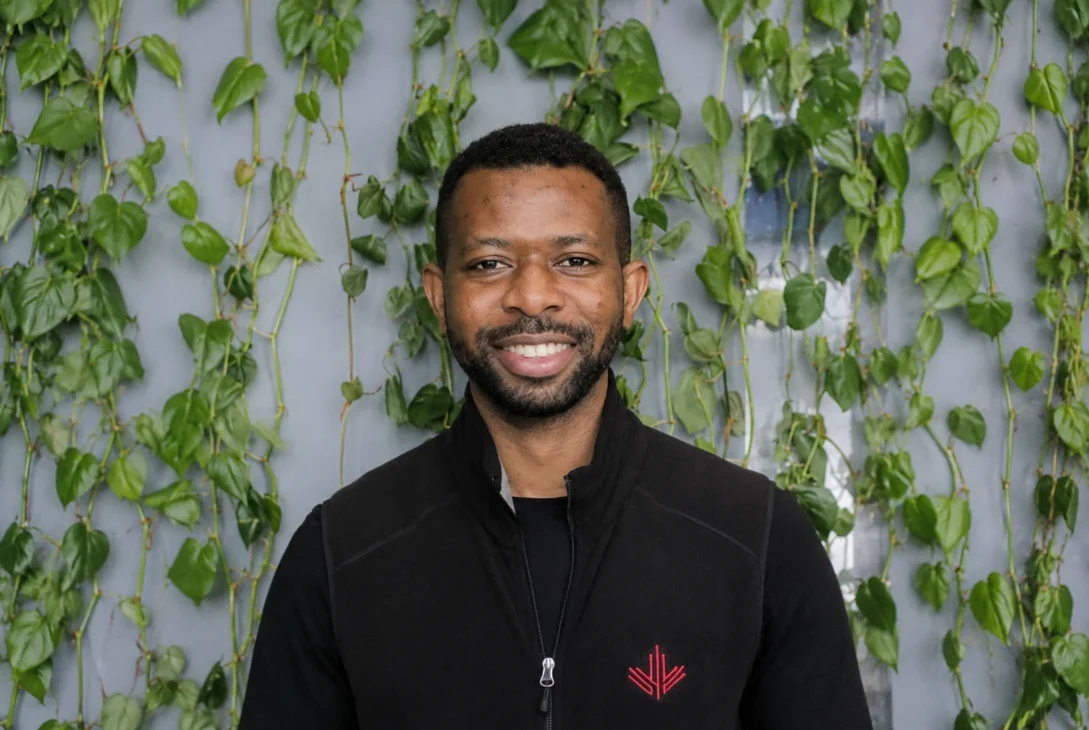
Charles Onu founded Ubenwa on a premise that sounds almost improbable: that a newborn’s cry carries diagnosable medical information, detectable by AI, that could save some of the roughly three million infants who die worldwide within their first month of life. Onu’s motivation was personal, tracing back to a cousin who suffered birth asphyxia in Nigeria and survived, but later developed a hearing condition, an outcome that pushed Onu toward neonatal health after studying electrical engineering at the Federal University of Technology, Owerri.
After relocating to Canada in 2015, Onu spent years working alongside neonatal intensive care specialists while pursuing a doctorate in Computer Science and Machine Learning at McGill University and Mila, the Quebec Artificial Intelligence Institute. There, he co-founded Ubenwa in 2017 alongside Innocent Udeogu and Samantha Latremouille, building a system around two machine-learning algorithms: one that isolates a newborn’s cry from ambient sound, and a second that identifies acoustic patterns distinguishing healthy cries from those of asphyxiated infants. The underlying research, first published at the Neural Information Processing Systems conference in 2017, has since appeared in venues including INTERSPEECH and the IEEE Engineering in Medicine and Biology Conference.
Ubenwa’s clinical case rests on a stark cost and access gap: standard birth asphyxia diagnosis requires a blood gas analyzer costing roughly $20,000 plus disposable cartridges priced around $600 per test, equipment unavailable across much of the world’s resource-poor settings. Ubenwa’s smartphone-based alternative delivers a risk assessment within about ten seconds of recording a newborn’s cry, non-invasively and at a fraction of the cost. Multi-center clinical studies spanning hospitals in Nigeria, Brazil, and Canada have validated the approach for detecting hypoxic-ischaemic encephalopathy, and the company has built what it describes as the largest clinically annotated database of infant cry sounds, including the CryCeleb dataset released for academic research.
Onu’s work matters because it targets a diagnostic gap with outsized consequences: birth asphyxia ranks among the top three causes of newborn mortality globally, disproportionately affecting infants in low-resource settings where specialized equipment and personnel remain scarce, and where a low-cost, skill-free tool built on something as universal as an infant’s cry could meaningfully shift outcomes.