
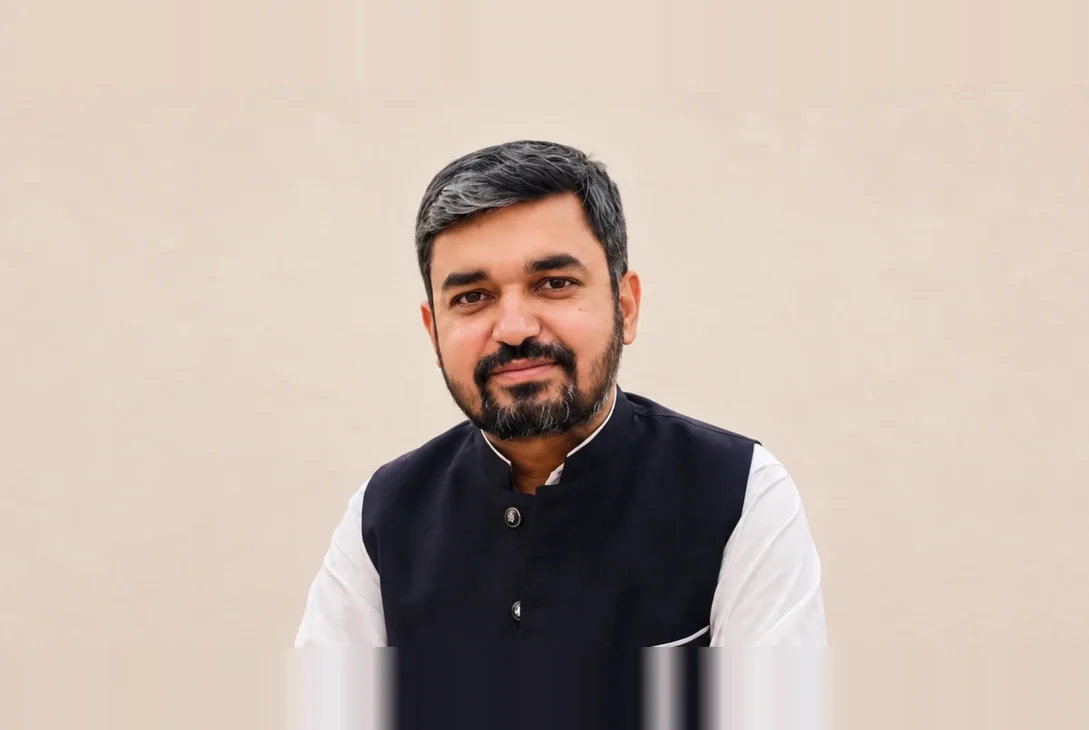
Dr. Muhammad Mehran Bashir has built an academic and research career around a persistent challenge in power engineering: how to monitor and forecast electricity consumption accurately without the cost and complexity of instrumenting every appliance in a home. As Assistant Professor and Head of the Department of Electrical Engineering at Muhammad Nawaz Sharif University of Engineering and Technology (MNS-UET) in Multan, Pakistan, Bashir has focused his research on energy harvesting, thermoelectric devices, sensors, metamaterials, and the application of machine learning to real-time energy systems. He is a Senior Member of the IEEE and an HEC-approved postgraduate research supervisor, having earned his doctoral training at the Ghulam Ishaq Khan Institute of Engineering Sciences and Technology.
Bashir’s most recent published research, appearing in the journal Sustainability in December 2025, examined Non-Intrusive Load Monitoring, a technique that estimates individual appliance-level energy use from a single aggregate meter reading rather than requiring sensors on every device. Working with co-authors across Pakistan and the University of Malta, his team evaluated six machine learning models, including Random Forest, XGBoost, and Support Vector Regression, using the PRECON dataset of forty-two Pakistani households. The study found Random Forest delivered the most accurate forecasts, achieving an R² score of 0.9865, and introduced an evaluation framework combining learning speed and edge adaptability with conventional accuracy metrics, an approach the authors noted had been largely absent from prior NILM research.
His broader publication record, cited more than 500 times according to Google Scholar, spans thermoelectric devices, solar absorbers, and machine learning applications for demand-side energy management. Bashir’s work matters because it addresses a scalability barrier facing smart grid deployment in developing economies: delivering appliance-level insight for load management and renewable energy integration using only the low-frequency data that existing utility infrastructure in Pakistan can realistically provide.