
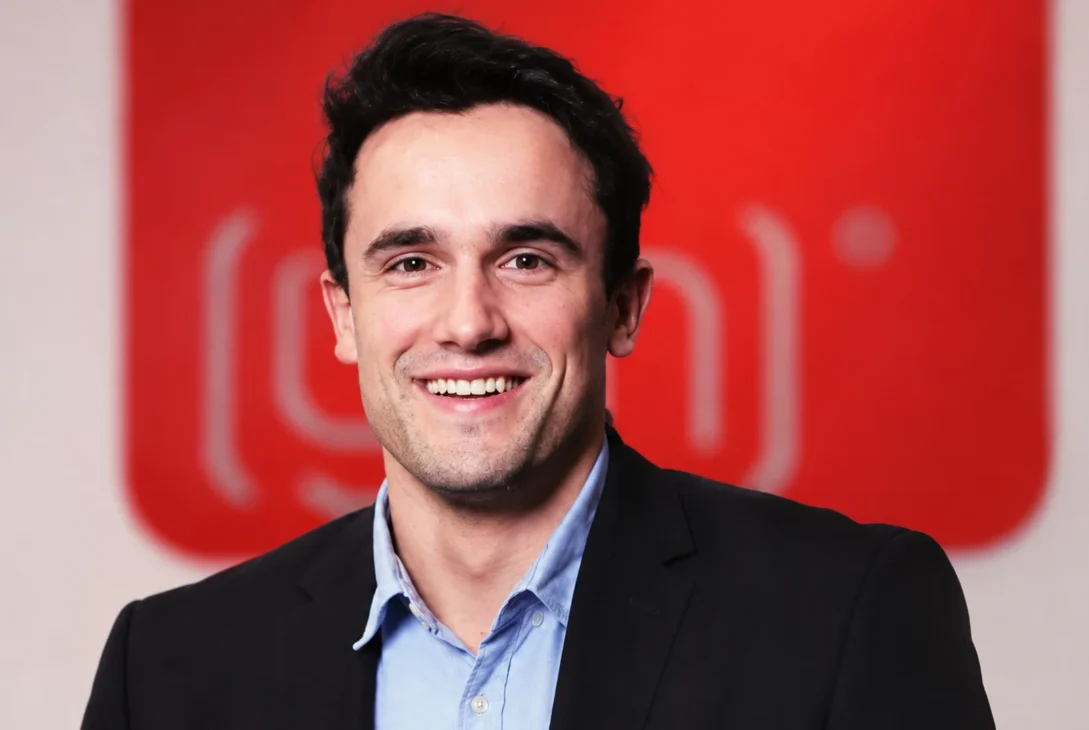
Michael Louis co-founded Cerebrium in 2021 with Jonathan Irwin, building a serverless infrastructure platform that lets engineering teams deploy and scale AI applications without managing the underlying compute complexity themselves. A South African entrepreneur educated at Stellenbosch University, Louis arrived at Cerebrium after serving as CTO of OneCart, an on-demand grocery delivery company he helped scale from $120,000 in monthly revenue to over $120,000 per day in under ten months during the COVID-19 pandemic, momentum that included an endorsement from the South African president before Walmart’s subsidiary Massmart acquired the company in August 2021.
Cerebrium’s core offering lets developers write standard Python code while the platform automatically handles GPU provisioning, autoscaling, and deployment, achieving sub-five-second cold-start times and the ability to scale to more than 10,000 requests per minute. Louis has said customers typically see roughly 40 percent cost savings compared to traditional cloud providers. The company, originally founded in Cape Town and now headquartered in New York, has been backed by Y Combinator, Gradient Ventures, SoftBank Investment Advisers, Global Founders Capital, and Sequoia Scout, closing an $8.5 million seed round led by Gradient. Its customer base includes Twilio, Ramp, Deepgram, Rudderstack, and Matterport.
Louis has structured Cerebrium’s growth around a deliberately lean model, running the company with a team of roughly four people while generating millions in annual recurring revenue largely through partnerships rather than a traditional sales organization, a contrarian approach relative to the aggressive fundraising and hiring that characterized many AI infrastructure startups following ChatGPT’s late-2022 launch. The company recently partnered with Multiverse Computing to combine AI model compression with Cerebrium’s elastic infrastructure, an effort Louis has framed as addressing the economic barriers preventing organizations from deploying AI at scale.
Louis has articulated ambitions beyond general-purpose infrastructure, stating that Cerebrium aims to become the infrastructure layer powering AI’s expansion into new domains including sports and real-time voice and video applications. His trajectory, from scaling a grocery delivery platform to an acquisition, to building developer infrastructure now used by enterprises processing real-time AI workloads, reflects a broader pattern among technical founders translating operational scaling experience directly into infrastructure products built for the constraints they once faced themselves.